Define the requirement
Identify the destination, intended use and document or standard requested by your buyer. Ask what can be supported for the selected model and order.
YUNFAN coordinates kitchen and bathroom storage sourcing with the selected production suppliers. Agree the inspection scope and the relevant material, test and shipment documents for your order. Material certificates and current test reports are available on request for wholesale buyers.
Food-grade stainless-steel grades; material certificates available on request
Polish, forming and finish checked per batch before packing
Current test reports matched to your target-market standard, available on request
Scanned certificates and test reports are shared with confirmed buyers — request the documentation set.
Yes — material certificates and current test reports are available on request for confirmed orders.
Inspection is arranged to the agreed order scope with the selected supplier or an appointed inspection provider. Confirm the timing, checks and reporting requirements.
Our food-grade stainless-steel materials suit kitchen storage for US, EU, MENA and other export markets; documentation is matched to your target-market standard.
Use this review to define document scope, model identity and traceability.
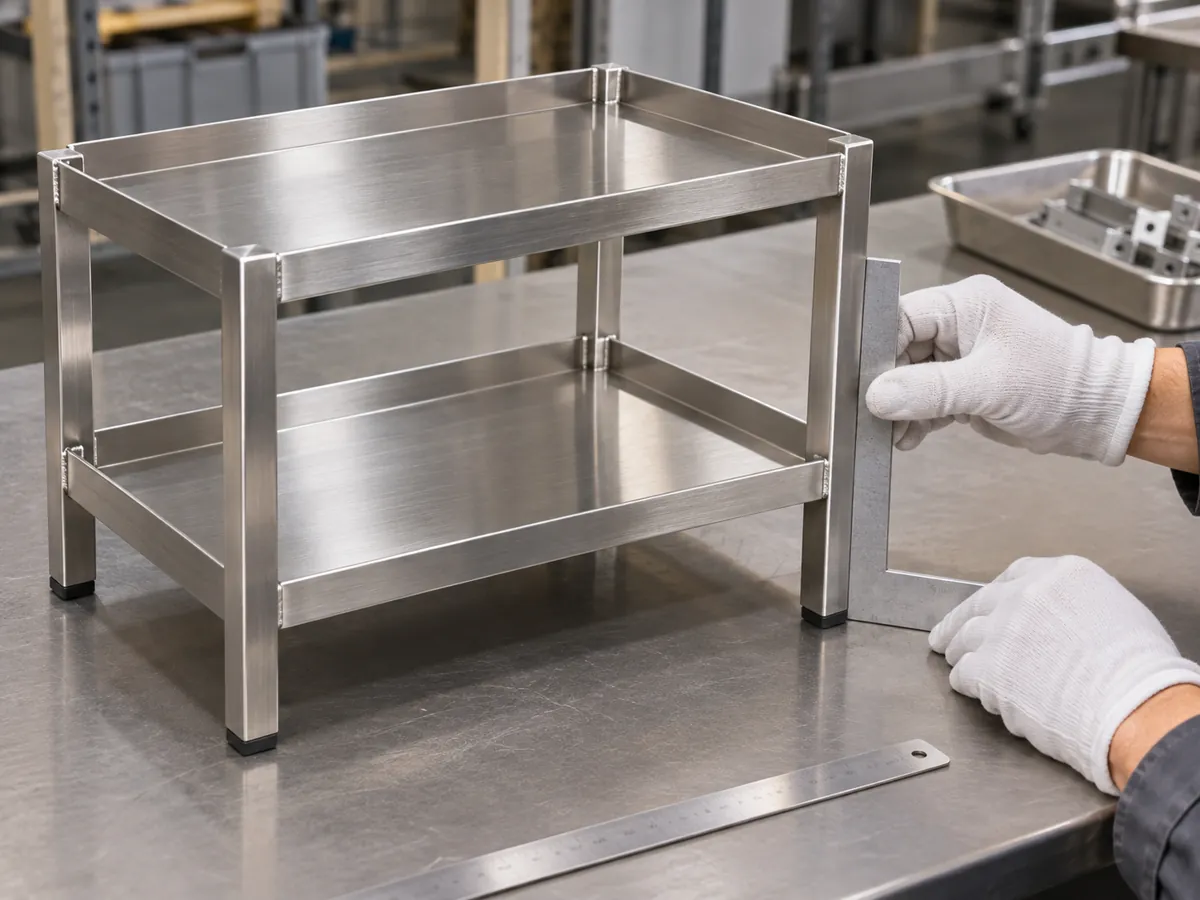
Keep the selected product references, open questions and agreed revisions together so that the next discussion can resolve the right details.
Identify the destination, intended use and document or standard requested by your buyer. Ask what can be supported for the selected model and order.
Review the issuer, holder, model or material scope, date and referenced result. Confirm whether the document describes material, a finished product or a particular inspection.
Store the relevant reference and any agreed additional checks with the product specification. Request clarification when the scope does not match the item being ordered.
Use the exact material description for the chosen components and the documented grade where relevant. Record finish, color and texture against a sample. Identify brackets, trays, holders, inserts and fixings separately when they affect the supplied item.
Identify the sample, drawing revision and component list being approved. Record the size, installed arrangement, appearance and accessory scope. Keep proposed changes and the final sign-off together so that the bulk specification is clear.
List the dimensions, assembly, appearance, moving-part and packing checks relevant to the selected design. Agree the sampling and acceptance approach. Any load or other performance requirement needs defined conditions and a result applicable to the chosen configuration.
Confirm the unit contents, protective insert, color or kraft box direction and assembly or mounting instructions. Check the artwork revision, barcode position and carton marks. Keep brand authorization and the approved artwork with the packing brief.
Record model, material, finish, included components, quantity per SKU, sample or tooling scope, unit and carton packing and delivery destination. Ask for assumptions, exclusions, quotation validity and the applicable commercial terms to be identified. Confirm MOQ and timing for the actual project.
Use confirmed carton dimensions, gross and net weight and carton quantity for each SKU. Keep assembled size separate from packed size. Prepare the packing list for the actual item mix and review handling, labelling and destination document requirements with the shipment plan.
Keep the approved specification, sample reference, artwork, inspection arrangement and change log under one order reference. At receipt, compare item identity, counts, accessories, packaging condition and the agreed checks with the purchase brief, and record any discrepancy promptly.
Certifications
Use the selected reference and the intended configuration to close the open points in your brief.