What are the open and folded dimensions?
Record the complete open footprint, folded storage size and the movement needed to open or close the rack. Include doors, nearby furniture and normal walking space.
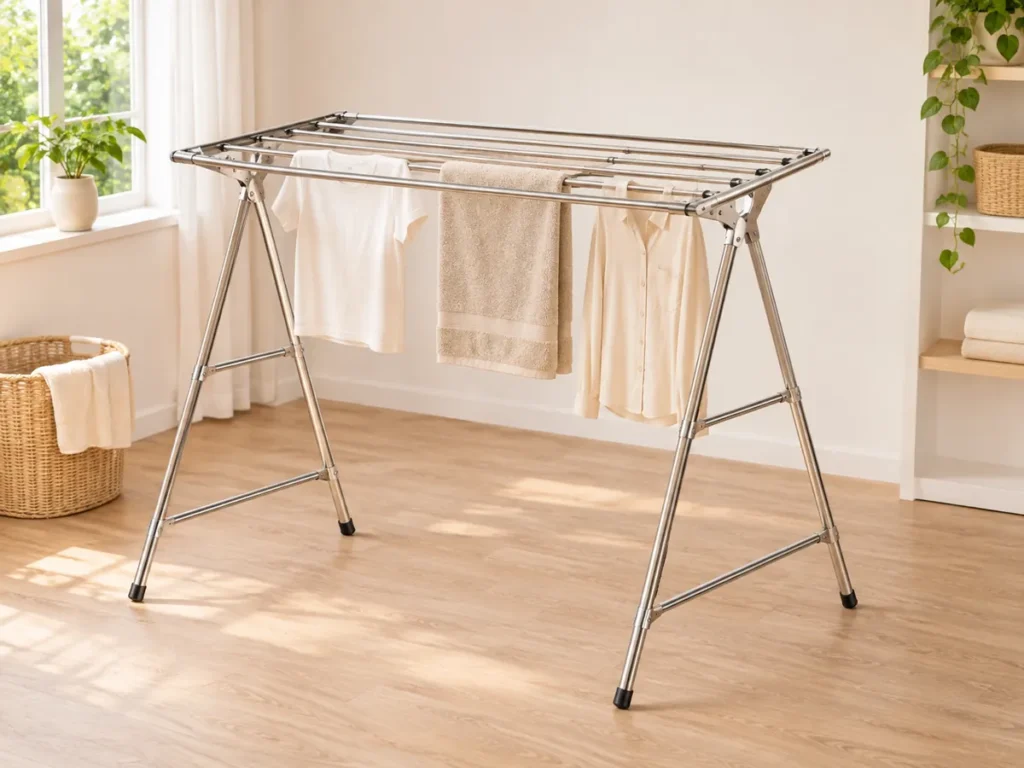 AI concept illustration
A laundry dryer rack is space-critical in small homes. This compares fold-down vs roll-up options and the steel grade that matters.
Clothes drying racks solve a universal problem: wet laundry needs somewhere to hang, and floor space is limited. In apartments, shared laundry rooms and homes without a dryer, the drying rack is essential. This guide compares the main types and explains the steel grade that prevents rust from wet clothes.
The two dominant designs are fold-down wall-mounted racks and roll-up (retractable) racks. Each saves space differently.
Fold-down wall racks mount to the wall and fold flat when not in use. They open to provide 3 to 5 horizontal bars for hanging clothes. When closed, they protrude only 5 to 8 cm from the wall. Fold-down racks suit laundry rooms, balconies and utility areas where a permanent fixture is acceptable.
Roll-up racks retract into a wall-mounted housing when not in use. They pull out to provide 3 to 5 lines of drying space. When retracted, only the housing is visible (10 to 15 cm wide). Roll-up racks suit kitchens and bathrooms where the rack must disappear completely when guests visit.
Freestanding X-frame racks are portable and fold flat for storage. They hold the most clothes (15 to 25 kg) but take up floor space when in use. These suit homes with dedicated laundry areas or outdoor drying.
Load capacity and bar spacing determine how much laundry the rack holds and whether clothes dry efficiently.
Bar spacing of 10 to 15 cm allows air to circulate between garments. Tighter spacing (under 8 cm) causes clothes to touch and dry slower. Wider spacing (over 18 cm) wastes vertical space.
Load capacity for wall-mounted fold-down racks is 10 to 20 kg depending on the number of bars and the wall anchor quality. Roll-up racks carry 8 to 15 kg. Freestanding X-frame racks carry 15 to 25 kg.
Bar diameter of 10 to 12 mm prevents clothes from creasing on the bar. Thinner bars (6 to 8 mm) leave visible crease lines on wet fabric. Specify 10 mm minimum for premium lines.
Drying racks hold wet clothes, making them one of the most moisture-exposed products in the home. Rust is the number one customer complaint.
304 stainless steel is the correct spec. It resists corrosion from constant moisture and maintains its finish over years of daily use. 201 steel will rust within months of regular use with wet clothes.
Powder-coated finishes in white, black or grey add a protective layer and suit modern laundry room aesthetics. The coating prevents water from direct contact with the steel surface.
Plastic-coated bars add grip and prevent clothes from sliding off. PVC-coated wire is common on budget racks. It works but can crack over time. Silicone-coated bars are premium and last longer.
Drying racks are large items relative to their weight. Packing efficiency directly affects shipping cost.
Flat-pack design is essential for fold-down and roll-up racks. The product should collapse to the minimum possible footprint for shipping. Confirm the flat-pack dimensions before ordering.
Master carton: fold-down racks pack 10 to 20 pcs per carton. Roll-up racks pack 15 to 25 pcs. Freestanding X-frame racks pack 5 to 10 pcs. These are high-CBM items that take significant container space.
MOQ for drying racks is 100 to 200 pcs per design. Production lead time is 20 to 30 days due to the complexity of folding mechanisms. Confirm the mechanism quality by requesting a video of the fold/unfold cycle before sampling.
Supply Partners-direct from Chaozhou, China. 304 and 316 stainless options. OEM and private-label reviewed against your artwork.
Choose around fit, access and the supplied specification. The comparison does not establish a performance rating for either format.
| Selection point | Freestanding folding rack | Wall-mounted drying rack |
|---|---|---|
| Working space | Requires an open floor footprint and a clear walkway. | Requires a suitable wall and usable projection when open. |
| Storage | Compare folded size and the opening movement. | Compare folded projection and access to the wall area. |
| Support | Review legs, joints and any locks with the laundry mix. | Review mounting, arms and the distribution of wet laundry. |
| Approve | Open and folded states with the intended load brief. | Mounting kit, movement envelope and installed configuration. |
Compare working space, folded storage and the actual laundry arrangement. Ask for any required load or cycle check on the selected rack.
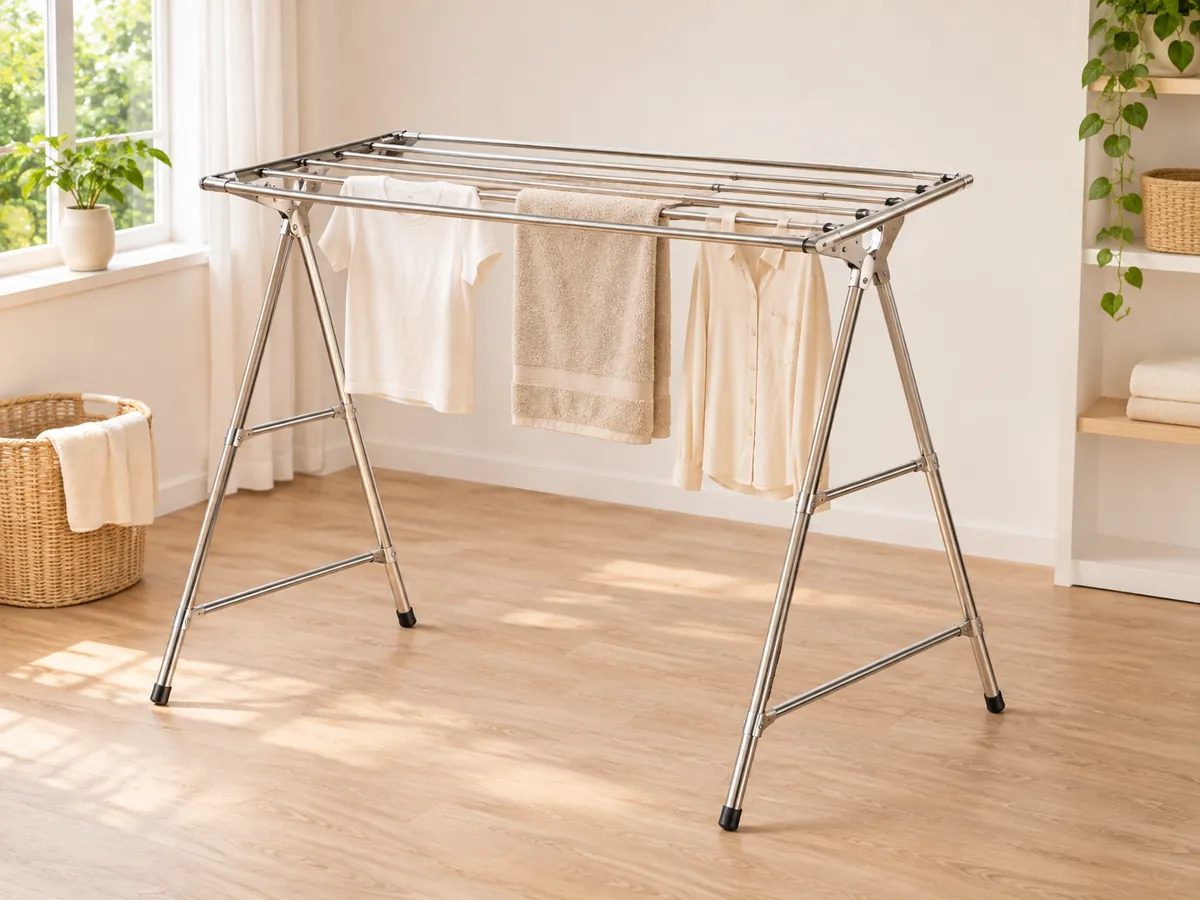
Review the actual items, their removal path and the complete occupied space. Confirm the selected model rather than applying one dimension to a category.
Record the complete open footprint, folded storage size and the movement needed to open or close the rack. Include doors, nearby furniture and normal walking space.
Use the intended wet-laundry weights and garment sizes, distributed in the proposed arrangement. Compare usable bar lengths, spacing and the support conditions.
Open and close the sample and review the actual hinges, stops and locks supplied. Agree any required cycle or load check for the model and record the acceptance approach.
Use the exact material description for the chosen components and the documented grade where relevant. Record finish, color and texture against a sample. Identify brackets, trays, holders, inserts and fixings separately when they affect the supplied item.
Identify the sample, drawing revision and component list being approved. Record the size, installed arrangement, appearance and accessory scope. Keep proposed changes and the final sign-off together so that the bulk specification is clear.
List the dimensions, assembly, appearance, moving-part and packing checks relevant to the selected design. Agree the sampling and acceptance approach. Any load or other performance requirement needs defined conditions and a result applicable to the chosen configuration.
Confirm the unit contents, protective insert, color or kraft box direction and assembly or mounting instructions. Check the artwork revision, barcode position and carton marks. Keep brand authorization and the approved artwork with the packing brief.
Record model, material, finish, included components, quantity per SKU, sample or tooling scope, unit and carton packing and delivery destination. Ask for assumptions, exclusions, quotation validity and the applicable commercial terms to be identified. Confirm MOQ and timing for the actual project.
Use confirmed carton dimensions, gross and net weight and carton quantity for each SKU. Keep assembled size separate from packed size. Prepare the packing list for the actual item mix and review handling, labelling and destination document requirements with the shipment plan.
Keep the approved specification, sample reference, artwork, inspection arrangement and change log under one order reference. At receipt, compare item identity, counts, accessories, packaging condition and the agreed checks with the purchase brief, and record any discrepancy promptly.
Clothes Drying Racks: Laundry Room Storage Guide
Use the selected reference and the intended configuration to close the open points in your brief.