✆ WhatsApp: +86 139 0274 9167
📍 Shantou, Guangdong, China | 🌐 EN
Uncategorized

Kitchen Organization Trends 2026: What B2B Buyers Stock

By November 18, 2026 3 min read
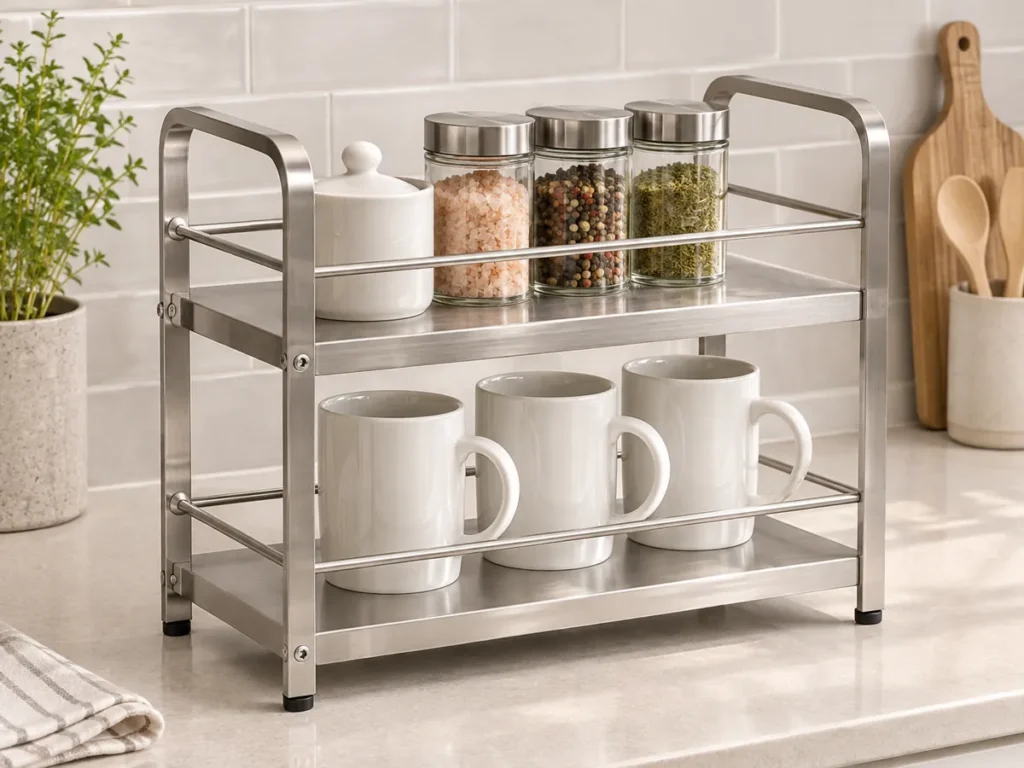
Countertop — AI-generated kitchen storage illustrationAI concept illustration

Kitchen Organization Trends 2026: What B2B Buyers Stock

Kitchen storage shifts toward vertical, mixed-material, no-drill. This is what the 2026 season looks like for B2B stocking plans.

Kitchen organisation retail is not static. The products that sold well in 2023 are not necessarily what will sell in 2026. This guide looks at the structural trends shaping the category and translates them into concrete stocking decisions for B2B buyers.

Vertical and Under-Sink Storage

Kitchen counters are the most contested real estate in the home. Products that move storage vertically or into otherwise wasted space are the growth segment.

Under-sink organisers use the space below the sink that is typically empty or cluttered. Expandable designs adjust to fit different cabinet widths. Load capacity of 10 to 15 kg handles cleaning supplies and cookware. This is a high-growth SKU for 2026.

Wall-mounted storage moves frequently-used items off the counter and onto the backsplash. Knife racks, utensil rails and pot lid holders all fall into this category. Wall-mounted products suit apartments and small kitchens.

Tiered countertop organisers use vertical space above the counter. Two-tier and three-tier designs double or triple the storage capacity of the same footprint.

Mixed Materials: Steel + Plastic

The 2026 buyer wants the durability of steel with the colour and softness of plastic. Pure stainless steel lines are giving way to hybrid designs.

304 steel frame with ABS accessories is the dominant hybrid pattern. The steel provides structure and corrosion resistance. The ABS provides colour, grip and visual warmth. A dish rack with a steel frame and ABS drain tray is the classic example.

Silicone-coated surfaces on steel bars prevent scratches on cookware and add grip. Silicone is dishwasher-safe and does not degrade like rubber.

Wood and steel combinations are the premium trend. A cutting board rack with a steel frame and bamboo or acacia wood shelves retails at a 40 to 60% premium over all-steel equivalents. This targets the mid-to-high market.

No-Drill and Rental-Friendly

The rental population is growing in every developed market. Products that install without drilling are accessible to this entire segment.

VHB adhesive mounting works on smooth tile and glass. It is the dominant no-drill technology for bathroom and kitchen wall storage. Load capacity of 3 to 5 kg covers most organisation products.

Clamp-on and over-cabinet designs hook onto existing structures. They work in any kitchen regardless of wall material. Cabinet-door organisers and over-shelf racks are the main categories.

Countertop and freestanding products require no installation at all. These suit the most cautious customers and the widest market.

How to Mix Lines into One Container

The 2026 stocking strategy is not to bet on one product type. It is to build a coherent range that fills a container efficiently and serves one buyer persona.

Anchor SKUs are the high-volume, high-visibility products: dish racks and storage racks. These fill the majority of the container and drive the buyer to your brand.

Filler SKUs are the lower-volume, high-margin products: knife holders, utensil caddies, pot lid racks, cup holders. These fill container gaps and increase average order value.

Container loading plan: ask your factory to optimise the mix. A well-planned 40-foot container holds 2000 to 4000 pcs across 8 to 15 SKUs. The factory’s loading plan is the most underused free service in B2B sourcing.

Mixed-material and no-drill products are the two trends that will define 2026 kitchen organisation retail. Buyers who stock both will capture the largest share of the growing market.

Stock for 2026 →

Supply Partners-direct from Chaozhou, China. 304 and 316 stainless options. OEM and private-label reviewed against your artwork.

Compare the complete configuration

Single-model launch vs Coordinated storage range

Choose around fit, access and the supplied specification. The comparison does not establish a performance rating for either format.

Single-model launchCoordinated storage range
Selection pointSingle-model launchCoordinated storage range
Customer taskFocus the brief on one clearly defined storage task.Define the separate task served by each SKU.
SamplesApprove the chosen model and its saleable pack.Maintain a sample and component reference for each model.
Order planningConfirm quantity, packing and schedule for one reference.Confirm quantities and packed data for the actual item mix.
ReviewUse customer feedback on fit, access and presentation.Review coverage and consistency across the complete range.
Compare My Shortlist
From shortlist to goods receipt

Put “Storage-range planning” into your buying brief

Use current customer needs and actual model specifications to plan the range. An editorial trend theme is a starting point for research, not a demand or sales guarantee.

Kitchen Storage & Organization application concept — AI concept illustration
AI concept illustration

Measurements to put in the brief

  • Worktop and cupboard dimensions
  • Sink and tap clearances
  • Item mix
  • Installation conditions
  • Unit and carton packing limits

Review the actual items, their removal path and the complete occupied space. Confirm the selected model rather than applying one dimension to a category.

01

Which customer task does each SKU serve?

Assign each SKU to a customer task such as dish drying, cupboard access, board storage or bathroom organization. A coordinated range should have a clear use for each model rather than relying on a trend label.

02

Which dimensions and installations suit the market?

Compare the target work areas, item sizes, mounting surfaces and removal clearances with the actual model specifications. Treat proposed variants as changes requiring their own review.

03

How will the combined range be packed?

Maintain quantities and packed measurements for each saleable unit. Build a combined packing list from the actual item mix instead of assuming that one carton specification applies to the whole range.

04

Record material, finish and component scope

Use the exact material description for the chosen components and the documented grade where relevant. Record finish, color and texture against a sample. Identify brackets, trays, holders, inserts and fixings separately when they affect the supplied item.

05

Approve a sample and control revisions

Identify the sample, drawing revision and component list being approved. Record the size, installed arrangement, appearance and accessory scope. Keep proposed changes and the final sign-off together so that the bulk specification is clear.

06

Agree a practical inspection plan

List the dimensions, assembly, appearance, moving-part and packing checks relevant to the selected design. Agree the sampling and acceptance approach. Any load or other performance requirement needs defined conditions and a result applicable to the chosen configuration.

07

Approve the saleable pack and artwork

Confirm the unit contents, protective insert, color or kraft box direction and assembly or mounting instructions. Check the artwork revision, barcode position and carton marks. Keep brand authorization and the approved artwork with the packing brief.

08

Compare quotations on a common basis

Record model, material, finish, included components, quantity per SKU, sample or tooling scope, unit and carton packing and delivery destination. Ask for assumptions, exclusions, quotation validity and the applicable commercial terms to be identified. Confirm MOQ and timing for the actual project.

09

Plan shipment using packed measurements

Use confirmed carton dimensions, gross and net weight and carton quantity for each SKU. Keep assembled size separate from packed size. Prepare the packing list for the actual item mix and review handling, labelling and destination document requirements with the shipment plan.

10

Keep an order record through receipt

Keep the approved specification, sample reference, artwork, inspection arrangement and change log under one order reference. At receipt, compare item identity, counts, accessories, packaging condition and the agreed checks with the purchase brief, and record any discrepancy promptly.

RFQ checklist for this page

Kitchen Organization Trends 2026: What B2B Buyers Stock

  • Product links or YF references and quantity per model
  • Intended storage task, item mix and installation location
  • Required dimensions and available clearance
  • Component material and documented grade where required
  • Finish, color and appearance reference
  • Mounting system or base arrangement and any required load review
  • Included accessories and assembly or mounting instructions
  • Product changes, drawing or sample reference and revision
  • Unit-box direction, protective packing, artwork and barcode requirements
  • Outer-carton quantity, measurements and weight to confirm
  • Destination, delivery point and document requirements
  • Target schedule, open questions and the decisions already fixed
Review My Procurement Brief
Buyer questions

Questions raised by this guide

Use the selected reference and the intended configuration to close the open points in your brief.

Which customer task does each SKU serve?
Assign each SKU to a customer task such as dish drying, cupboard access, board storage or bathroom organization. A coordinated range should have a clear use for each model rather than relying on a trend label.
Which dimensions and installations suit the market?
Compare the target work areas, item sizes, mounting surfaces and removal clearances with the actual model specifications. Treat proposed variants as changes requiring their own review.
How will the combined range be packed?
Maintain quantities and packed measurements for each saleable unit. Build a combined packing list from the actual item mix instead of assuming that one carton specification applies to the whole range.
How should I use this guide when comparing actual models?
Use the article to define your selection questions, then compare the product references on the linked category pages. Confirm worktop and cupboard dimensions, sink and tap clearances, item mix, installation conditions, unit and carton packing limits for the actual models.
What information should accompany an inquiry based on this article?
Send the model links or YF references, the open questions raised by “Kitchen Organization Trends 2026: What B2B Buyers Stock”, quantity per item, destination and packaging direction. Mark the details still requiring review.
What belongs in a kitchen storage range?
Build around tasks: dish drying, cupboard organization, knife and utensil access, board and lid storage, cup hanging and cookware organization. Shortlist actual models within each group.
Should I start with one hero item or a mixed range?
Start with the intended customer and channel. One model simplifies the initial specification; a mixed range needs separate quantities, samples and packing data for each SKU.
Ask a Question About This Page
WhatsApp